News & Resources
Our Latest Blogs

August 12, 2025
3 mins
Second Victims in the Operating Theatre: What the New 2025 Data Means for Retained-Swab Prevention
Second victims in the operating theatre are often overlooked in patient safety discussions. When retained surgical swabs occur, the impact…
Read Blog

July 14, 2025
3 mins
Why Swab Counting Errors Cost More Than You Think, And How to Fix It
Introduction Swab counting isn’t considered among the most exciting topic in healthcare. But it’s one of those behind-the-scenes processes that…
Read Blog

June 21, 2025
4 mins
Creating Safer Workflows: The Human-Centric Approach to Swab Counting
In the fast-paced, high-pressure environment of an operating theatre or maternity ward, patient safety is always the top priority. Yet,…
Read Blog

June 12, 2025
4 mins
How Retained Swabs Affect Clinicians: A Hidden Burden in Healthcare
Retained swabs affect clinicians in profound and often overlooked ways. While the patient impact is well-known, the hidden emotional and…
Read Blog

iCount Resources
The Causes & Hidden Cost of Never Events
These references explore the consequences, policy implications, risk factors, and financial/legal burdens associated with retained surgical items (RSIs).
HSIB, CQC, NHS Improvement, Joint Commission, NHS NPSA, Australia & NZ reports
NHS Long Term Plan & US Navy Navmed Policy
Gawande et al., Birolini et al., Zhan & Miller – major prevalence and outcome studies
Gawande, Steelman, AHRQ – reports showing high costs and added hospital stays
Bailey, Kaiser, Gualniera – legal and malpractice case reviews
Dozens of country-specific studies: US, UK, India, France, Kenya, Brazil, etc.
Wan et al., Sirihorachai et al., Tabibzadeh et al., Anderson – systematic reviews and safety studies
Edel, Greenberg, Christian – documenting risks in manual count procedures
Joint Commission & cost analyses comparing RFID/barcoded swabs with iCount (£9/patient)
Regenbogen et al. – cost model showing economic value of iCount-like tech
Mathew & Imoto – showing limits of imaging to detect RSIs
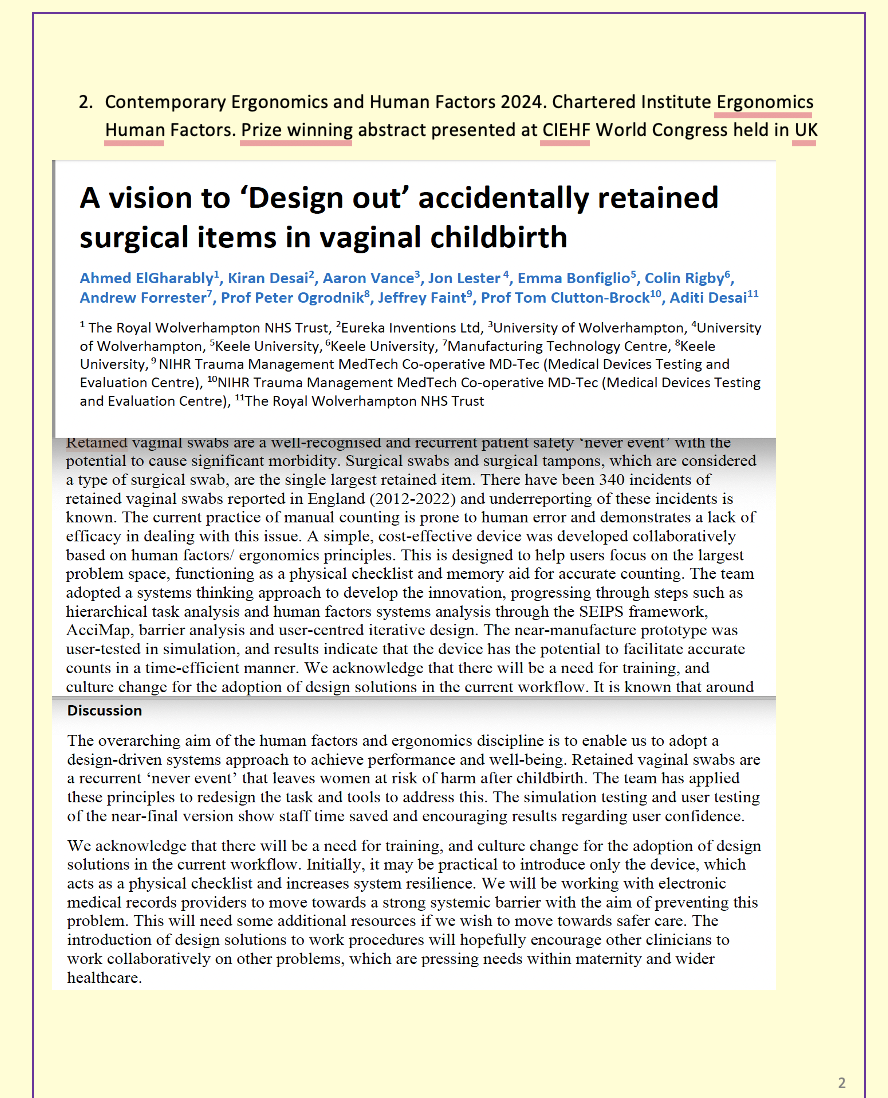
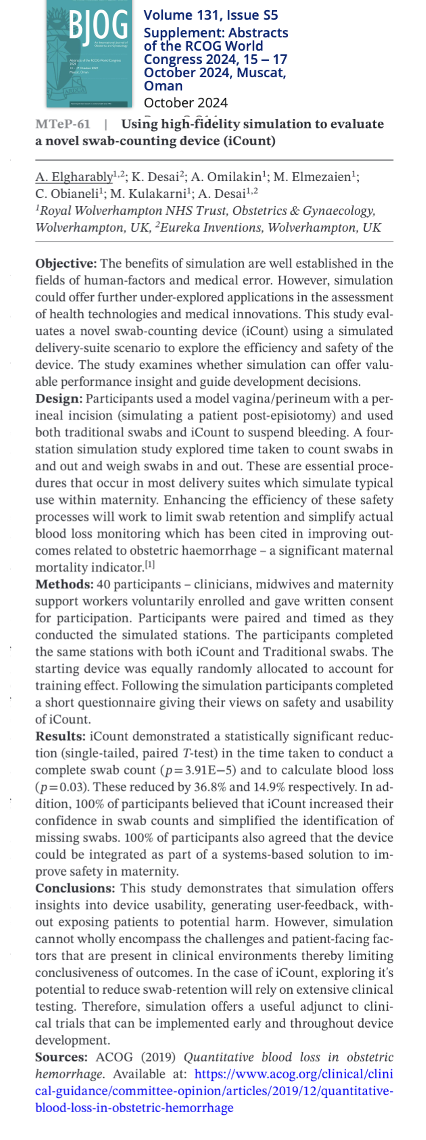
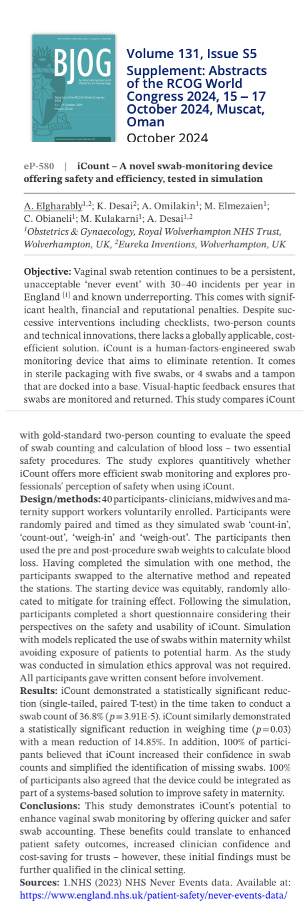
The iCount Evidence Base
These references support interventions, technology innovations, and human-factors-based solutions to prevent RSIs underpinning the rationale for adopting tools like iCount.
Key Value Proposition
iCount is a simple, human-factors-engineered system that acts as a physical checklist to support accurate swab counts to reduce reliance on memory in high-pressure clinical settings .
Our technology is:
- Clinician centred and easy to adopt
- Designed for global health systems, adaptable to your protocols.
iCount supports safer surgeries, for every team, in every theatre, maternity and procedural setting.
It was designed to support surgical teams ensuring swabs are counted accurately and efficiently. With an intuitive docking mechanism with optional computer vision, AI enabled verification, iCount helps reduce manual errors in swab tracking, supporting efficiency in high-pressure environments without disrupting workflow
